Jumping Isn’t One Skill, It’s Six

Picture of Written by Ben de Vaus
Written by Ben de Vaus

Noosa bike hire, self guided rides and mountain bike coaching, from a local team that rides these trails every day.

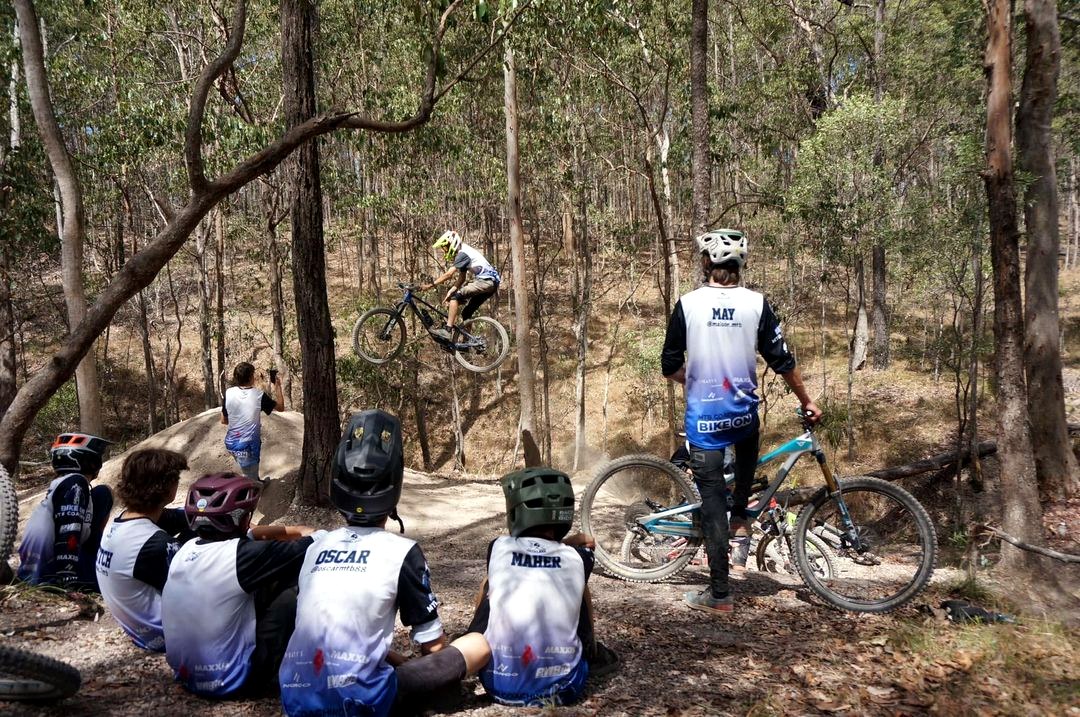
Bike On riders and coach watching a teammate jump during a coaching session

Content

Learning to jump

You Might Not Need a Jump Lesson (Yet)

Plenty of confident riders cruise blue and black trails and feel that jumping is the one gap left. Some have jumped for years but still feel stiff in the air, get bucked, land nose first or land rear wheel heavy. The natural answer seems to be a jump lesson.

A jump isn’t a single trick. It’s a high end manoeuvre built from six core skills, all used at speed, in a couple of seconds or less, with no time to think. Build those skills first, and putting them together into a jump becomes the easy last step. Even strong riders usually don’t just need to be shown how to put the pieces together. What holds most riders, even strong riders back from jumping confidently and correctly is more fundamental than an explanation or demonstration on “how to jump”.

Why Good Riders Still Struggle to Jump

Every jump is different. Approach speed, ramp length and steepness, how sharp the lip is and how long the table is all change the timing. A rider who learned “the move” on one jump is lost on the next. A rider who owns the skills adapts.

Riding into a jump, the ground pushes up on you whether you’re ready or not. If you’re passive, it pushes you off balance and the bike goes where it wants. Good jumping is about controlling the jump, not letting the jump control you.

Many riders are very good at surviving, but not so good at driving. Jumping shows whether you’re driving the bike or just riding along on it. What underpins that is the ability to create and release pressure precisely, on demand, at speed.

What a jump is made of

The Six Skills Inside Every Jump

Stability & Balance

Staying strong and centred between the wheels keeps both wheels loaded evenly, so the bike leaves the lip level and calm. It’s the same skill you need to hold a high speed berm, and it gives you grip and control everywhere else. That’s why a lot of successful jump lessons start on faster berms.

Pressure Control

The engine of a jump, and the difference between being a passenger and a driver. The same skill that stops you getting bucked also gives you speed without pedalling, and speed through corners. It’s how you manage the forces the trail throws at you through rollers, berms and rock gardens. How much pressure you create, when and how quickly you create it, and when you release it all depend on many factors. That’s why a strong understanding of pressure management is essential before you start jumping.

Timing & Coordination

The when and the how much. Timing is what brings your other skills together: the right movement, at the right moment, in the right amount. It’s built on simpler moves like wheel lifts and small drops, learning when to press and when to absorb. It’s also what makes rock gardens feel smooth and pump tracks fast. Riders who can hold their flow through a trail without pedalling tend to be better jumpers.

Operation of Controls

Setting your speed early. There’s nothing worse than arriving at the face of a jump and realising you’re too fast or too slow. Strong riders don’t set their speed at the entry to a corner or in the middle of it. They arrive ready, and jumps are exactly the same.

Direction Control

Picking your line and putting the bike where you want it. Just as you choose an entry line for a corner, you need to choose one for a jump. Riders who control their direction well are smoother on every trail, and better set up for jumping.

Terrain Awareness

Reading the trail ahead: corners, rock gardens and rollers. That’s how you set your decisions around timing, your speed and how much pressure you’ll need. On a jump you do the same thing in a split second: read the face as you come in, set your speed, decide how hard and when to push, and know what the jump is about to do to you.

Jumping is all six of these skills working together. Each one is built somewhere else first: in berms, rollers, rock gardens, drops and on the pump track. Each one makes you a better rider there too. Once they’re solid and instinctive, putting them together into a jump is the easy part. None of them are, or should be, taught on the face of a jump.

Most Jumping Improvements Are Made on the Ground

The classic stiff, tall rider in the air, sometimes called a “dead sailor”, usually comes from not managing the pressure created by the jump, often with the rider sitting too far back and too stiff. That’s a sign position and pressure control aren’t instinctive yet. On a jump there’s no time to think, so these skills have to happen on their own.

Drifting back, straight arms and braking when you should be committing show up on every trail, not just on jumps. So “I need a jump lesson” often really means “I need position, pressure and timing lessons.”

It’s also why “just send it” is poor advice. Speed matters, but with good technique you need far less of it than most people think. A lot of jump crashes come from riders being egged on to commit or go faster when the real problem is technique, and more speed only makes that problem bigger.

You’ll often hear riders talk about “pulling” a bike into the air: “that one needs a big pull”. But you can’t lift something you’re standing on. Riders who jump well leave the ground by pushing the ground away, calmly managing the forces the jump throws at them, and the bike comes with them.

A quick check

Are You Ready to Jump?

Many of our adult jump lessons never get to a jump, because other skills need to be consolidated first. This isn’t a complete list, but here are a few signs worth checking first.

Lifts without yanking

Can you do a small front wheel lift, rear wheel lift and level lift by calmly pushing the ground away and staying centred over the top of the bike? If you’re still yanking at the bars or throwing your weight back, start there.

Grip in corners

Losing front wheel grip in corners usually means you’re too far back or sinking through the turn under its force. A berm is really a jump on its side. If a berm pushes you back, the ramp of a jump will too.

Speed through berms

If you have to slow right down to get around a berm, your position is worth working on before bigger skills.

Small drops

If you get pitched forward or land front wheel first off small drops, you probably have some timing, body position and pressure management to develop before moving on to jumps. 

These are all position, pressure and timing skills, and they can’t be safely taught on the face of a jump. They’re built somewhere calmer first. The last check is simple: do you feel ready? If you have the skills but still feel nervous, start small, on low consequence features, and build from there. Even for riders with the technical ability, a mental block can undo the best technique under pressure.

What Sits Underneath a Jump

Here’s roughly what a rider works through before a jump lesson is worth doing:

  • Position: neutral and ready positions, and moving between them, centred between the wheels
  • Rollers and berms: pressing and absorbing with the right timing, then pumping them for speed
  • Lifts: front, rear and level wheel lifts, done by pushing the ground away, not pulling
  • Drops: small drops, pressing and absorbing as the bike leaves the edge
  • Not jumping jumps: being able to roll jumps at speed while absorbing them and keeping the wheels on the ground
  • In the air: small, low, consistent airs to build muscle memory and confidence, then bigger and different jumps

Riders move on when they’re comfortable, consistent and correct. For experienced adults that often means undoing old habits first, like riding too far back, riding low and locked, or braking into features. That takes time. It isn’t a problem. It is the lesson.

How Kids Learn to Jump

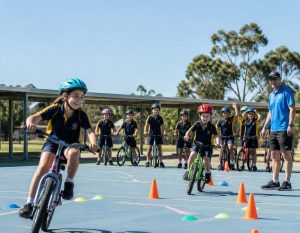
We very rarely teach jumping in our kids coaching programs. We teach the skills a jump is made of, and riders learn what those skills are for. Using pressure to pop off a small roller is one example. Jumps are an incidental part of many mountain bike trails, and kids being kids, most start putting it together and jumping on their own. A well coached rider can do it more safely because the foundation is there.

Formal jump coaching starts at the Upper Intermediate and Advanced levels, where we build higher end jumping skills on top of that foundation. There’s more on what the bike gives kids beyond skills in More Than a Sport.

It Pays Off on Every Trail

Every skill under a jump makes you a better rider everywhere: more grip, more speed without pedalling, more control in rough and steep terrain, and better corners. Building the skills first isn’t the slow way. It’s the way that makes jumping repeatable, safer and more fun, and makes every new jump easy to read.

It’s the same foundation our riders take all the way to racing and coaching. Read how in From First Ride to State Champion, or Coach.

FAQs

Learning to Jump: Your Questions

A good sign is being able to do small front wheel, rear wheel and level lifts calmly, without yanking at the bike, and holding your speed and grip through berms.

If you still feel nervous, start small on low consequence features.

No. You can’t lift a bike you’re standing on. Riders who jump well push the ground away and the bike comes with them.

Yanking at the bars is one of the most common signs a rider isn’t ready to jump yet.

It depends on your foundation skills. Riders with solid position, pressure control and timing can often put a jump together quickly.

Others need to build those skills first, and that’s normal.

Usually because the pressure at the lip isn’t being managed and the rider is too far back, with too much weight on the rear wheel.

The back wheel then pushes against the ramp harder than the front, so it leaves the lip higher and tips the bike forward. The fix is position and pressure management that happen instinctively, which is why we teach those before we teach jumping.

No. Good jumpers stay with the bike through body position and pressure control, not by being clipped in.

Clips can hide the fact that the foundation isn’t there yet.

Not directly until the Upper Intermediate and Advanced levels.

Before that, we teach the skills a jump is built on, and most riders start jumping on their own, with the control that makes it safer. See our kids coaching programs.

Like all mountain biking, jumping carries some risk, but most jump crashes come from poor technique, not a lack of speed. With good technique you usually need far less speed than you think.

Being told to just commit or go faster rarely fixes anything. Extra speed makes a technique problem worse, not better, which is why we build the skills first.

Adult skills sessions

Build the Foundation First

A skills session with one of our qualified coaches starts with how you ride now, and builds the foundations that make jumping easy to put together.

BIKE HIRE NOOSA

Discover Noosa with premium bikes built for comfort and adventure. Choose from road bikes, e-bikes, mountain bikes, cruisers, kids’ bikes and more. Hire by the day or longer.

NOOSA BIKE TRAILS

Discover sealed riverside paths, hinterland gravel, quiet country roads, purpose built singletrack and a long stretch of open beach, all on routes locals actually ride.

MOUNTAIN BIKE COACHING 

Fun, inclusive and progressive coaching for all ages and abilities. Learn new skills, ride with friends and take your mountain biking to the next level.

Browse by type
Coaching
Need help choosing the right coaching program? Our team can help you choose the right program for your ability
View Coaching Programs
Browse experiences
Equipment Hire
Need help choosing the right gear? Our team can put together the perfect hire package for your group.
View All Equipment Hire
Browse by terrain
Bike Trails
Need help choosing the right bike trail? Talk to us today about the best ride for you
View all trails
Browse by category
Bike Hire
View our full range of bikes for hire Talk to us today about the best bikes for you
View all bikes for hire